

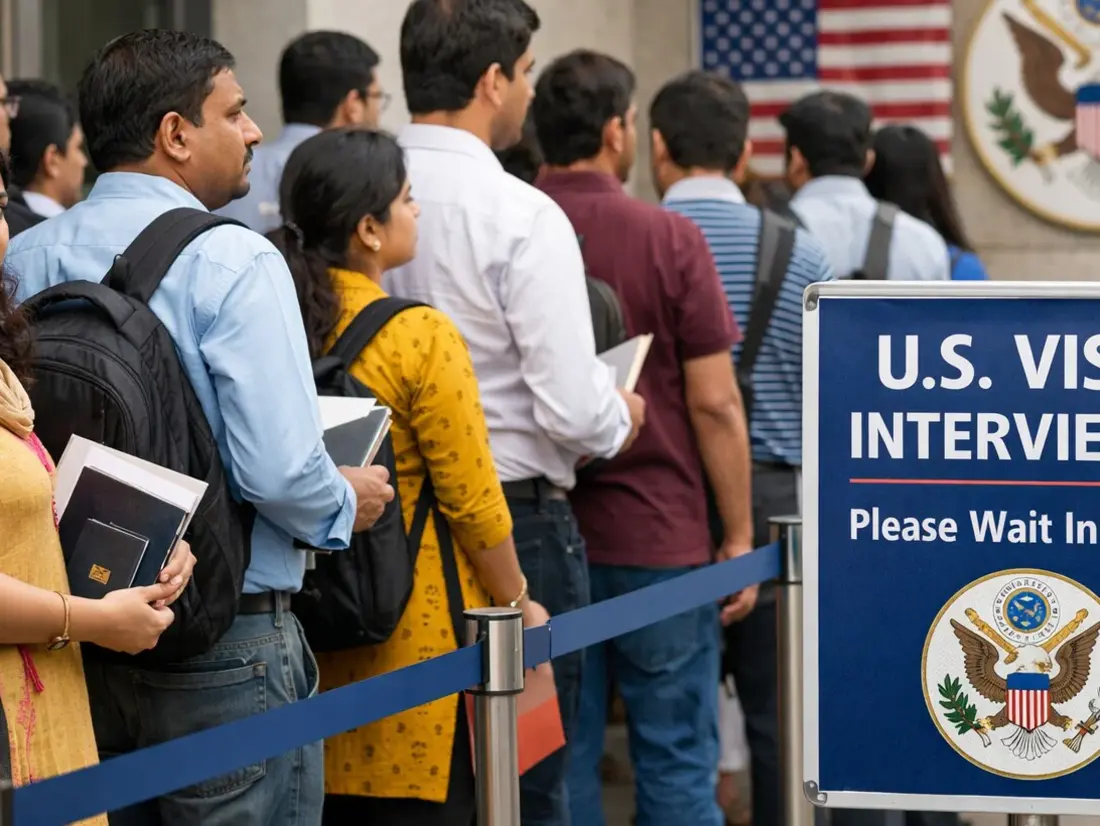
2025 has become a reality check for Indian students aspiring to study overseas. Once considered a straightforward pathway, international education is now facing unprecedented visa scrutiny, forcing thousands of students and families to reassess their plans.
From the United States to Canada and Australia, stricter visa norms, higher financial thresholds, and deeper background checks are reshaping the global education landscape—and Indian students are at the center of this shift.
Visa Rejections Surge Across Top Destinations
Early warning signs emerged from the United States. According to estimates shared by Jainesh Sinha, COO and Co-founder of education finance platform GyanDhan, the F-1 student visa rejection rate for Indian applicants jumped to nearly 27% between March and May 2025—a significant rise compared to previous years.
The situation is even more alarming in Canada. For the August 2025 intake, visa rejection rates reportedly touched 74%, marking one of the strictest phases in the country’s international education policy.
Australia, too, has tightened entry requirements, raising financial proof thresholds and intensifying verification checks.
“These figures indicate a clear shift towards a far more selective and documentation-heavy visa process,” Sinha noted.
Why Are Visa Rejections Increasing?
The sharp rise in refusals is not random—it is policy-driven and compliance-focused. Key reasons include:
- Fake or unverifiable offer letters
- Insufficient or inconsistent financial documents
- Weak proof of intent to return to India after studies
- Mismatched academic history and career goals
- Incomplete or misleading information across applications
Additionally, countries facing housing shortages, labour market pressure, and illegal immigration concerns have introduced caps on international student intake. With demand remaining high, authorities are filtering applications more aggressively—making even small documentation errors costly.
Visa Rejection Now Comes With a Heavy Financial Price
A rejected visa in 2025 is no longer just an academic setback—it’s a financial one.
According to experts, each failed visa attempt can expose families to losses ranging from ₹3 lakh to ₹10 lakh, factoring in:
- University application and seat confirmation fees
- Foreign exchange and documentation costs
- Non-refundable deposits
- Education loan interest during the waiting period
Reapplying has also become tougher. Students must now explain past rejections in detail—even when applying to a different country—and restructure financial proofs if funding was cited as the reason for refusal.
What Has Changed in Visa Policies?
Australia
- Minimum savings requirement raised to AU$29,710 (approx. ₹18 lakh)
- This equals 75% of Australia’s national minimum wage, nearly 17% higher than earlier limits
United States
- Evaluation now goes beyond academics
- Visa officers assess funding sources, social media activity, and post-study clarity
- Students must clearly justify how the course fits into long-term career plans
Canada
- Stricter verification of bank statements, fund sources, and financial consistency
- Higher rejection rates for poorly documented or rushed applications
Interesting Read
Impact on Education Loans
Interestingly, stricter visa rules have not killed aspirations—but they have delayed decisions.
- Education loan disbursals for overseas studies dropped by around 8% last quarter
- Loan applications increased, indicating students are exploring options, waiting longer, or considering alternative destinations
This shift shows caution, not cancellation.
What Students Must Do Differently Now
Experts emphasize that preparation and consistency are non-negotiable in 2025.
Students should focus on:
- Clean, complete academic records
- A strong Statement of Purpose (SOP) aligned with past education and future goals
- Clear financial documentation showing legal and traceable fund sources
- Realistic post-study employment plans, especially if an education loan is involved
“If students are taking loans, they must be able to explain EMI repayment plans through realistic India-based career opportunities,” Sinha advised.
Even minor inconsistencies—across documents or social media profiles—can now trigger outright rejection.
Looking Beyond Traditional Study Destinations
Over-dependence on countries like the US, UK, Canada, and Australia has become risky.
As a result, Indian students are increasingly exploring:
- European countries
- Asia-Pacific destinations
- Nations with predictable visa timelines and controlled education costs
Having at least one alternative destination is no longer optional—it’s strategic.
The Road Ahead: Plan Smarter, Not Harder
The surge in visa rejections reflects a deeper global shift in how international education is regulated. Strong documentation, financial transparency, early planning, and destination diversification are now essential—not optional.
As students prepare for 2026 admissions, those who stay informed, flexible, and well-prepared will have a clear advantage in navigating the new reality of global education.
