

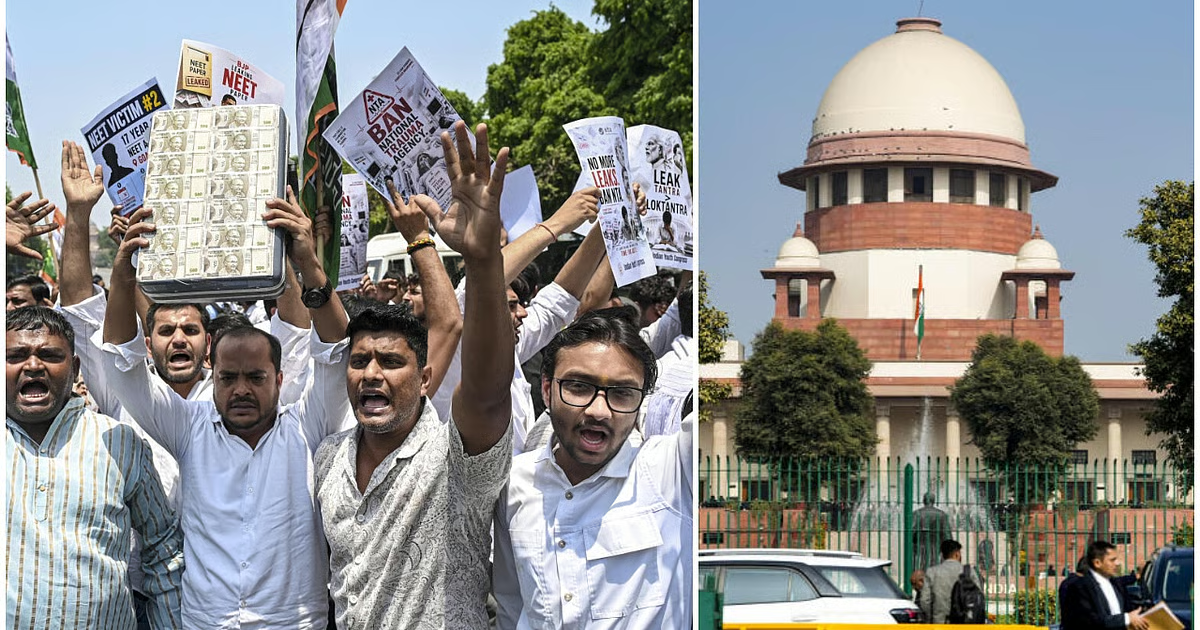
The National Eligibility cum Entrance Test Undergraduate (NEET-UG) 2026 controversy has once again raised serious concerns about the credibility and security of India’s competitive examination system. After reports confirmed a paper leak in the NEET-UG 2026 examination, the Supreme Court sharply criticised the National Testing Agency (NTA), stating that the organisation had “not learnt its lesson” despite the major controversy surrounding the NEET examination in 2024.
The paper leak affected the future of nearly 23 lakh medical aspirants across the country. Following the incident, authorities cancelled the examination and ordered a Central Bureau of Investigation (CBI) inquiry into the matter. A fresh re-examination has now been scheduled for June 21, 2026.
Supreme Court Questions NTA’s Failure
During the hearing, the Supreme Court expressed disappointment over the recurrence of such incidents despite earlier warnings and recommendations made after the 2024 NEET controversy.
Justice P.S. Narasimha observed that the Court had previously directed reforms in the examination system and constituted a committee led by former ISRO Chairman K. Radhakrishnan to suggest improvements in the functioning of the NTA.
The Court noted that despite accepting those recommendations and forming monitoring committees, another major security breach occurred in 2026, putting the careers and mental well-being of millions of students at risk once again.
Petitions Seek Major Reform in NTA
The case was heard after petitions were filed by medical organisations including the Federation of All India Medical Association (FAIMA) and the United Doctors Front.
The petitions demanded:
- Complete restructuring of the NTA
- Transition of the NTA into a statutory body
- Greater parliamentary accountability
- Stronger security measures for entrance examinations
- Shift towards Computer-Based Testing (CBT)
The petitioners argued that repeated exam leaks indicate systemic failures rather than isolated incidents.
Interesting Reads
Not just NEET, NTA needs revamp
Jobs in 2026: Data-Driven Skills Indian Employers Will Actively Hire For
Demand for Digital Security Measures
One of the major suggestions before the Court was the implementation of advanced digital security systems to prevent future leaks.
The petitions recommended:
- Digital locking of question papers
- Elimination of physical transportation risks
- Adoption of computer-based examinations
- Enhanced monitoring mechanisms
Experts believe that moving towards fully digital testing systems could reduce the possibility of paper leaks and improve transparency in national-level examinations.
NTA Asked to Submit Affidavit
The Supreme Court directed the NTA to submit an affidavit within three days detailing the steps taken to implement the recommendations suggested after the 2024 controversy.
The Court also asked former ISRO Chairman K. Radhakrishnan to provide a separate report regarding the implementation status of the proposed reforms.
The matter is expected to be heard again later this week on an urgent basis.
Growing Concerns Among Students
The repeated controversies surrounding NEET examinations have created anxiety among students and parents across India. Aspirants preparing for highly competitive medical entrance exams invest years of hard work, coaching, and preparation.
Many students have expressed concerns over:
- Exam fairness
- Transparency in evaluation
- Security of question papers
- Mental stress caused by repeated cancellations
Education experts believe that restoring trust in the examination system has now become a top priority for authorities.
Why This Issue Matters
NEET-UG is one of India’s largest and most important entrance examinations for medical admissions. Any disruption in the process affects lakhs of students, colleges, counselling schedules, and the healthcare education ecosystem.
The 2026 paper leak controversy has once again highlighted the urgent need for:
- Transparent examination systems
- Technological reforms
- Stronger accountability mechanisms
- Better protection of student interests
Conclusion
The NEET-UG 2026 paper leak controversy has intensified discussions about the future of India’s national testing framework. With the Supreme Court openly criticising the NTA and seeking detailed explanations, the pressure for large-scale reforms in the examination system is growing rapidly.
As students await the re-examination and investigation outcomes, education authorities now face the challenge of rebuilding public trust and ensuring that such incidents do not repeat in the future.
The coming weeks could play a major role in determining the future structure, accountability, and credibility of India’s competitive examination process.
